THE SHORT ANSWER
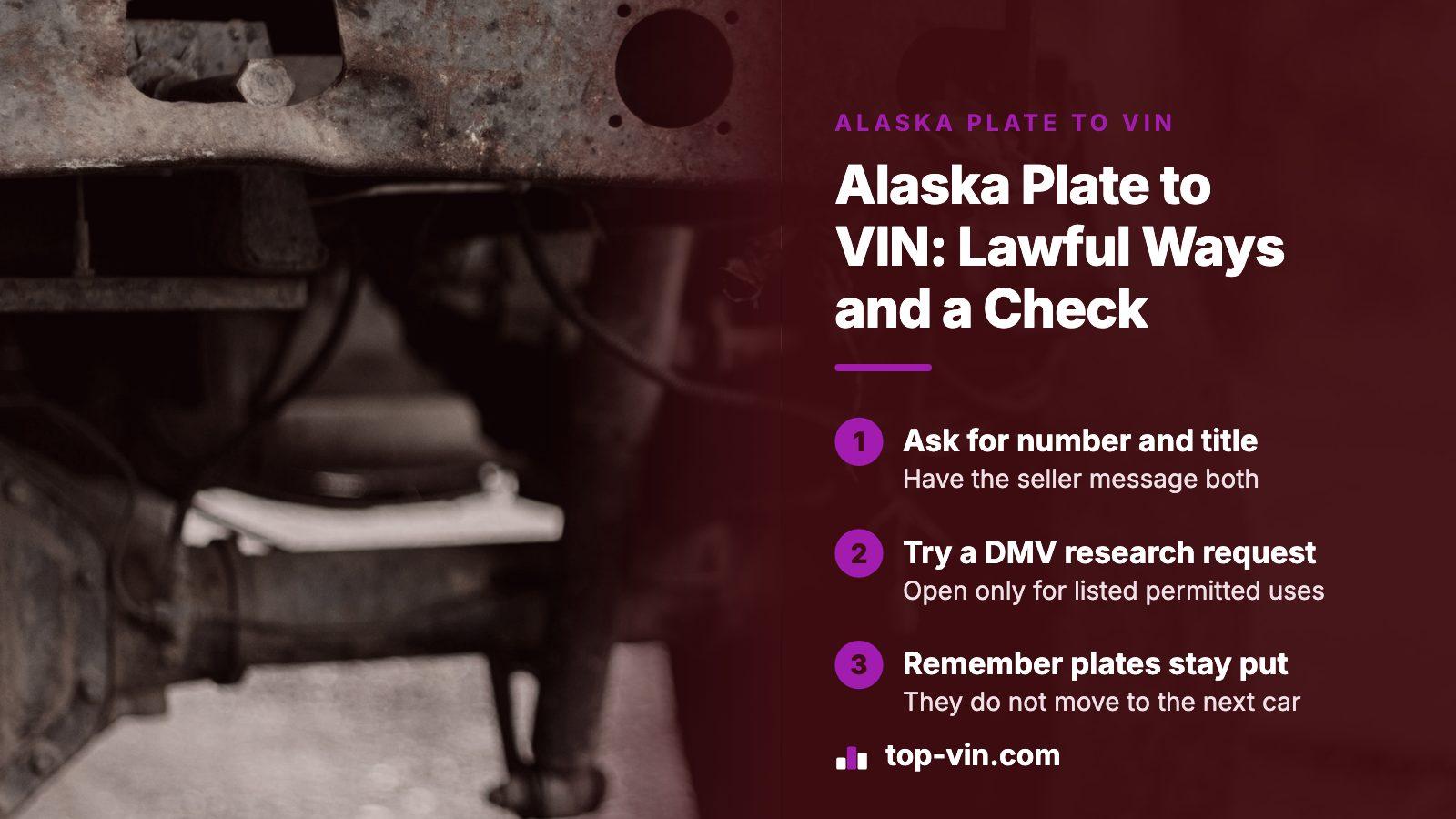
You cannot look up a VIN from an Alaska plate on a public state tool. Have the seller message you the number and the title, read it from the vehicle itself, or find it on the registration or insurance card. If you qualify under a listed use, the DMV takes a research request for a small per-record fee. Then run the VIN through a check; the preview is free.
- Public plate search
- None offered by the DMV
- DMV research request
- $5 electronic, $10 paper
- Standard plates
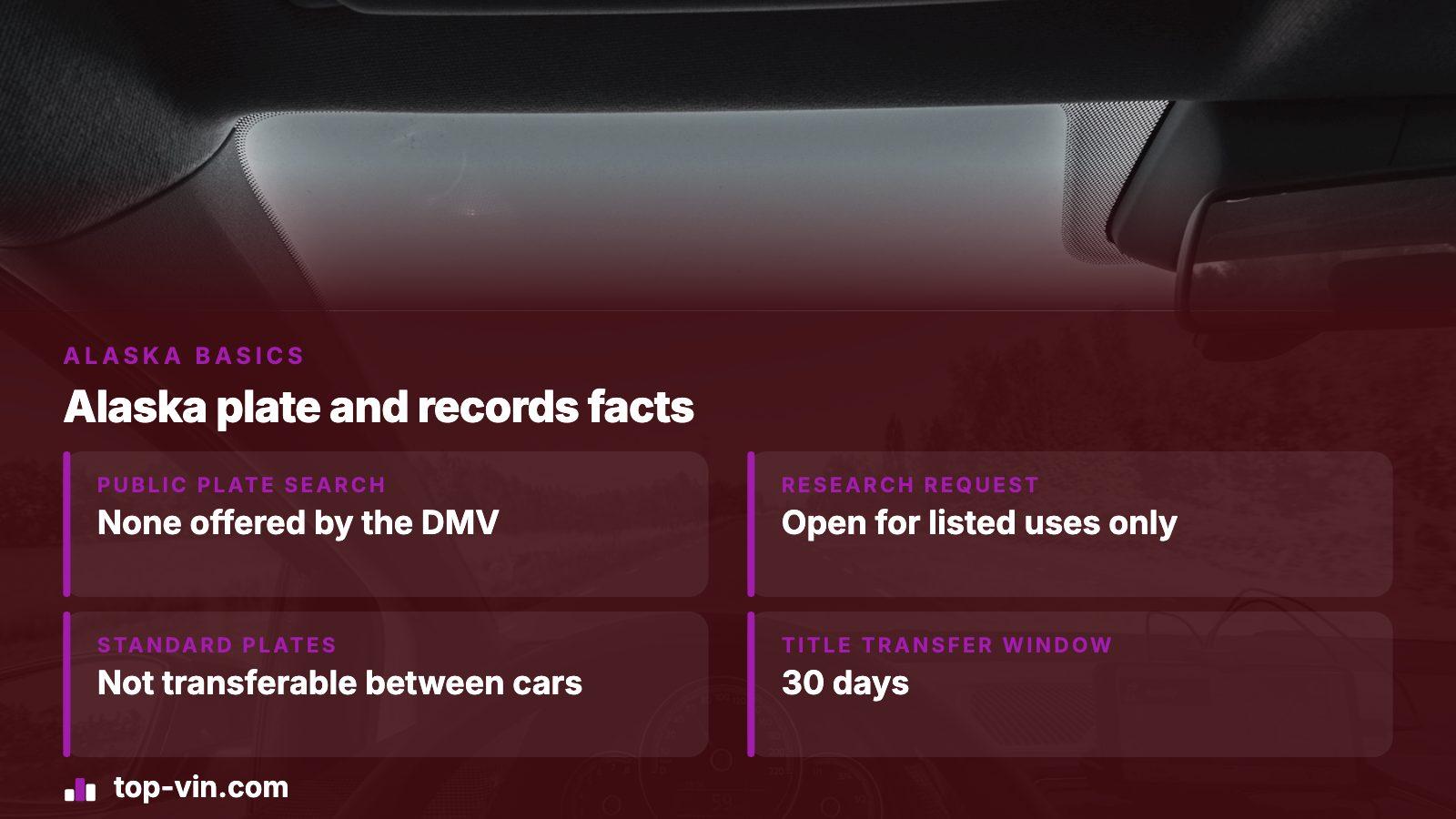
- Not transferable between vehicles
- TopVIN check
- Free preview, then one payment
What an Alaska plate search can and cannot do
Plenty of websites promise a VIN, an owner and an address for any Alaska tag. The state does not run a service like that, and the DMV says outright that its vehicle records are restricted by both state and federal law. Anything personal on the record, meaning names and addresses, stays withheld unless the requester fits an authorized exception.
TopVIN is built around the VIN, because the VIN is what history databases are keyed to: title brands, odometer entries, salvage sales and theft reports all attach to it. A plate is just a registration tag. So the practical job is to get the number honestly from a source that will not mislead you, then check that exact car.
Five lawful ways to get the VIN
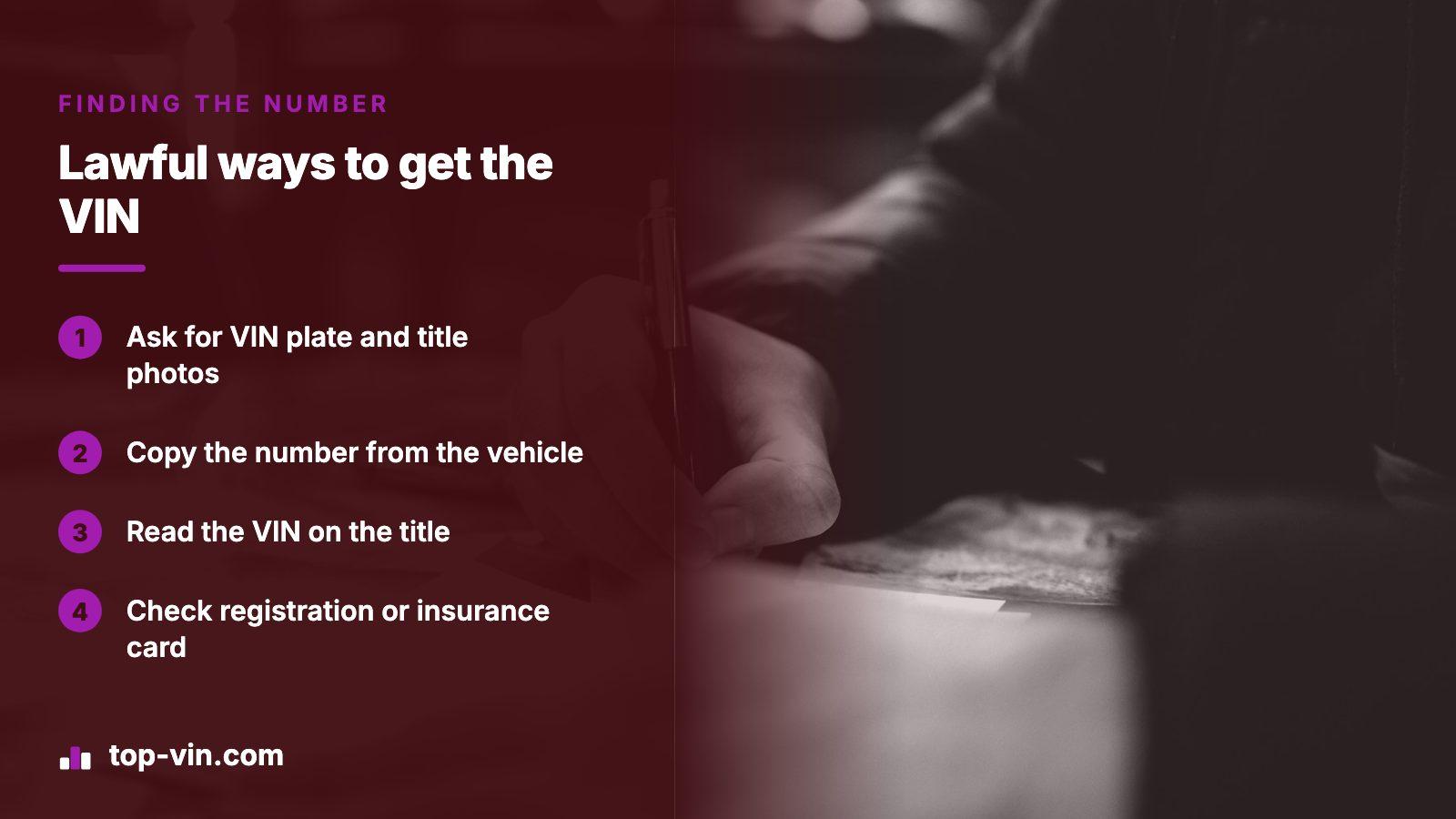
Work down this list in order. The early items are free and fast, and most Alaska buyers never need to involve the state.
- Request a sharp picture of the VIN plate and the front of the title from the seller. Hesitation here is a data point.
- Go to the vehicle and copy the number yourself, then hold it against the paperwork.
- Read the title, which carries the VIN next to the make and year.
- Check the registration or the insurance card, which normally lists it too.
- Where you have a legal basis, file a research request with the Alaska DMV.
The last route is slow and conditional. It exists for legal and business needs, not as a shortcut for a shopper who would rather not ask the seller.
Filing a vehicle record research request
The DMV takes research requests online through its my.alaska.gov services, or by mail on Form 851 with payment by check or money order. The mailed version goes to the research desk at the Ingra Street office in Anchorage.
| Item | What the DMV lists |
|---|---|
| Electronic record | $5 each |
| Paper record | $10 each |
| Registration list | A bulk registration list, priced separately from single records |
| Mail-in payment | Make a check or money order out to the State of Alaska DMV |
You must declare an authorized use when you ask. Several of them need supporting documents. The DMV may release a record to the owner named on it and to government agencies. Checking out a used car before buying is not on the list of declared uses.
The federal law behind the refusal
Federal privacy law for motor vehicle records, section 2721 of Title 18, keeps state licensing agencies from giving out the personal details in their files, apart from listed exceptions. The exceptions cover government work, safety, theft and recall matters, court proceedings, insurers, towing notices, licensed investigators, employer checks on commercial drivers, and release with the person's written consent.
Be wary of plate-to-owner promises
A site that says it returns an Alaska owner's name or address from a plate alone is claiming access the DMV itself does not give the public. TopVIN does not offer plate lookups. It starts from the VIN.
How Alaska plates behave when a car is sold
Most Alaska vehicles display a single plate, mounted at the back, plus a valid registration sticker showing month and year. Commercial vehicles over 10,001 pounds mount it at the front instead. A standard plate and tabs come with the first registration fee, and standard issue plates are not transferable. So the metal you photograph belongs to a registration, not to a person you can trace.
When a car with personalized or specialty plates sells, the seller keeps those plates and the DMV supplies the buyer a replacement set without further fee. That detail helps when you read a listing photo: a personalized plate visible in the ad may be gone by the time you collect the car, so never rely on it to identify the vehicle. Rely on the VIN.
Matching the VIN to the title before you pay
In Alaska the signed title moves ownership. A bill of sale alone does not, though the DMV suggests one that lists the serial number, a description, both names, the date and both signatures. Where owner names on the title are joined by AND, every owner has to sign; with OR, one can.
- Read the title's VIN against the vehicle's VIN, one character at a time
- Look at the odometer statement, which the seller completes on the title
- Check for a lienholder before handing over money
- Make sure the person selling is the person the title names
An Alaska resident who buys a vehicle has 30 days to title it in his or her own name, on form V1 signed in ink. A mismatch between the title and the car is better found now than at the counter.
What a VIN check adds once you have the number
The federal title system, NMVTIS, is operated by the Department of Justice, aims to shield consumers from fraud and dangerous vehicles and to stop stolen ones returning to sale. A report drawn from it covers five items: which state holds the title now and since when, any brands, the mileage on file, total loss events and salvage events. They leave out repair, recall and routine maintenance data, so a fuller report matters.
A TopVIN report adds damage records, auction sales, liens, theft entries and open recalls to the title data. Read the brand and mileage lines first. A brand or a mileage drop calls for a lower offer or a firm no, while a spotless record is encouraging but proves nothing about the mechanics.
A car that came up the highway or by barge
Plenty of Alaska vehicles started life titled in another state. Brands from another state travel with the VIN, so a title that looks clean locally can still carry a history from other states.
Price and the order of your next moves
Running the preview is free. If the car still appeals, one payment buys the full report on that VIN, and a pack covering several reports is available when you are weighing more than one vehicle. There is no subscription and no automatic renewal. Today's offers are on the pricing page.
- Get the VIN from the seller, the car or the paperwork
- Run the free preview
- Purchase the full report when the car holds up
- Book a mechanic's inspection before any money moves
- Transfer the title within the 30 days Alaska allows
The FTC stresses that a history report cannot replace a hands-on inspection from an independent mechanic, and Alaska buyers should heed that too.
Where this information comes from
- Alaska DMV: motor vehicle record requests — Fees, how to submit, and the authorized uses a requester declares.
- Alaska DMV: license plates — Where plates are displayed and which ones transfer.
- Alaska DMV: selling a vehicle — Title assignment, bills of sale and plate removal at a sale.
- Alaska DMV: used vehicle purchase — The buyer's titling deadline and the form used.
- GovInfo: 18 U.S.C. 2721 — The federal limits on releasing personal data from motor vehicle records.
- NMVTIS (U.S. Department of Justice) — The purpose of the national title system for consumers.
- FTC: used cars — Advice to pair a history report with an inspection.
Sources and photos: Facts checked against the sources above in November 2026. Photos by Zoshua Colah, Owen Michael Grech and Sander Jeurissen on Unsplash; diagrams by TopVIN.
Keep reading
- Vehicle registration lookup: what it shows and which check to addWhat registration records show and who can see them.
- Motor vehicle records: what a car buyer can see, and what stays closedHow state vehicle records are released and to whom.
- How to read a VIN: a left-to-right walkthrough with a worked decodeReading the 17 characters once you have them.
- VIN verification: the four checks people mean and what each provesConfirming the number on the car matches the paper.
Frequently asked questions
Can I find a VIN from an Alaska license plate?
Not through any public Alaska tool. The DMV restricts vehicle records, and personal details need an authorized use. Buyers do better asking the seller, reading the number on the vehicle, or finding it on the title, registration or insurance card, and checking that VIN.
What does an Alaska DMV research request cost?
The DMV lists $5 for an electronic record and $10 for a paper one. Mailed requests go on Form 851 and are paid by check or money order. You must declare an authorized use, and some uses need supporting documents.
Does an Alaska plate go with the car when it sells?
Standard issue plates are not transferable between vehicles. Personalized and specialty plates come off with the seller, and the DMV gives the buyer replacements without extra cost. Ask the DMV what applies to the exact plate type on your car.
Is it legal to look up an owner by plate in Alaska?
Only for permitted uses under federal law and the DMV's own list, such as the owner of record, insurers, court matters or towing notices. Simply wanting to vet a seller is not among them, so work from the VIN instead.
What should I do after I have the VIN?
Match it against the title and the car, then run the free TopVIN preview, and read brands and odometer entries first. If the car still fits, buy the report once, then get an independent inspection before you pay the seller.
Now check the car itself
The guide explains what to look for. The report shows what this VIN has on record.