THE SHORT ANSWER
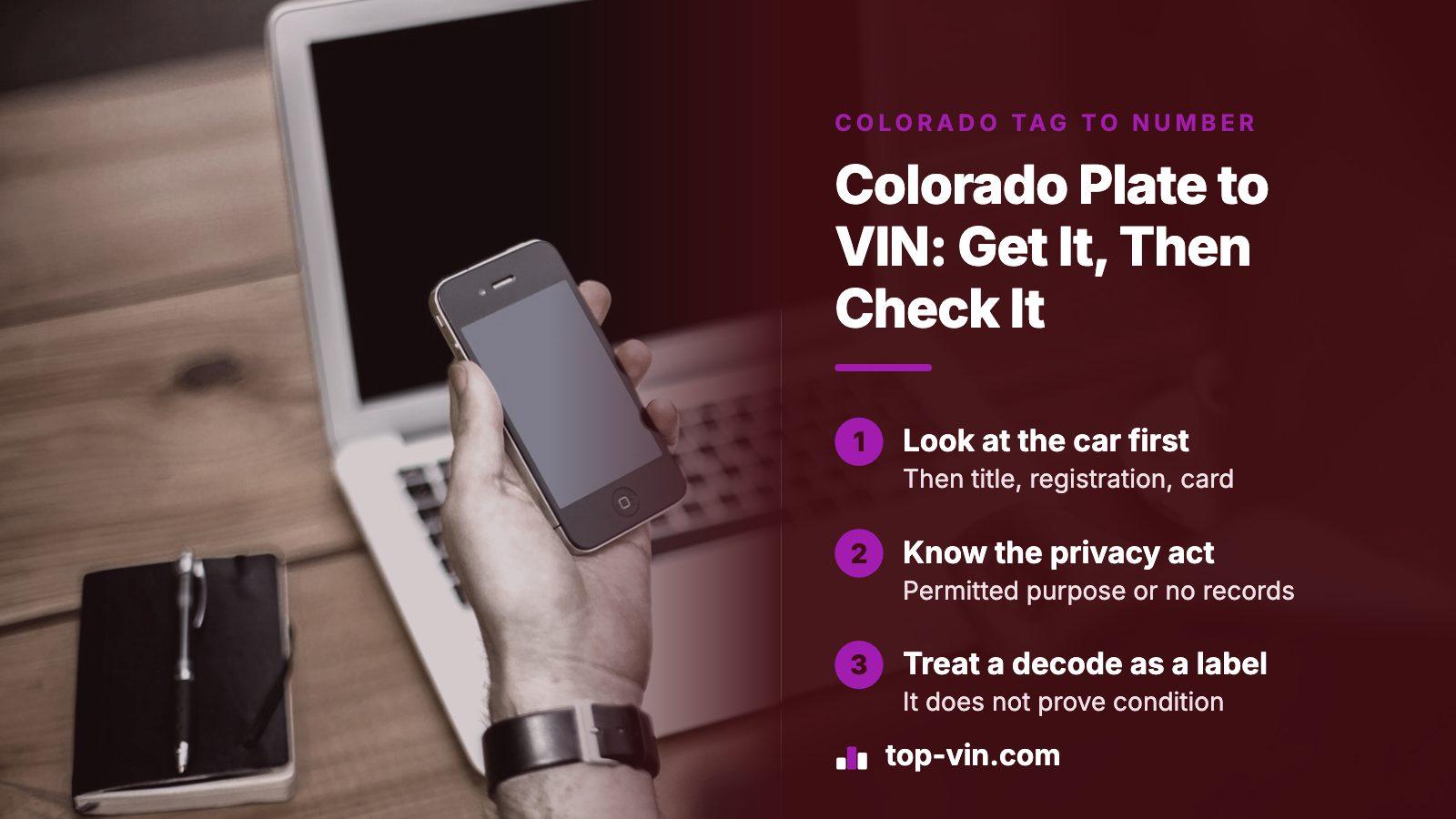
No lawful public tool turns a Colorado plate into a VIN for an ordinary buyer. Ask the seller, read the title, registration or insurance card, or look at the car. Only people with a permitted purpose under the federal Driver's Privacy Protection Act can request records from the state. Once you have the VIN, run it for a free TopVIN preview.
- Public plate-to-VIN search
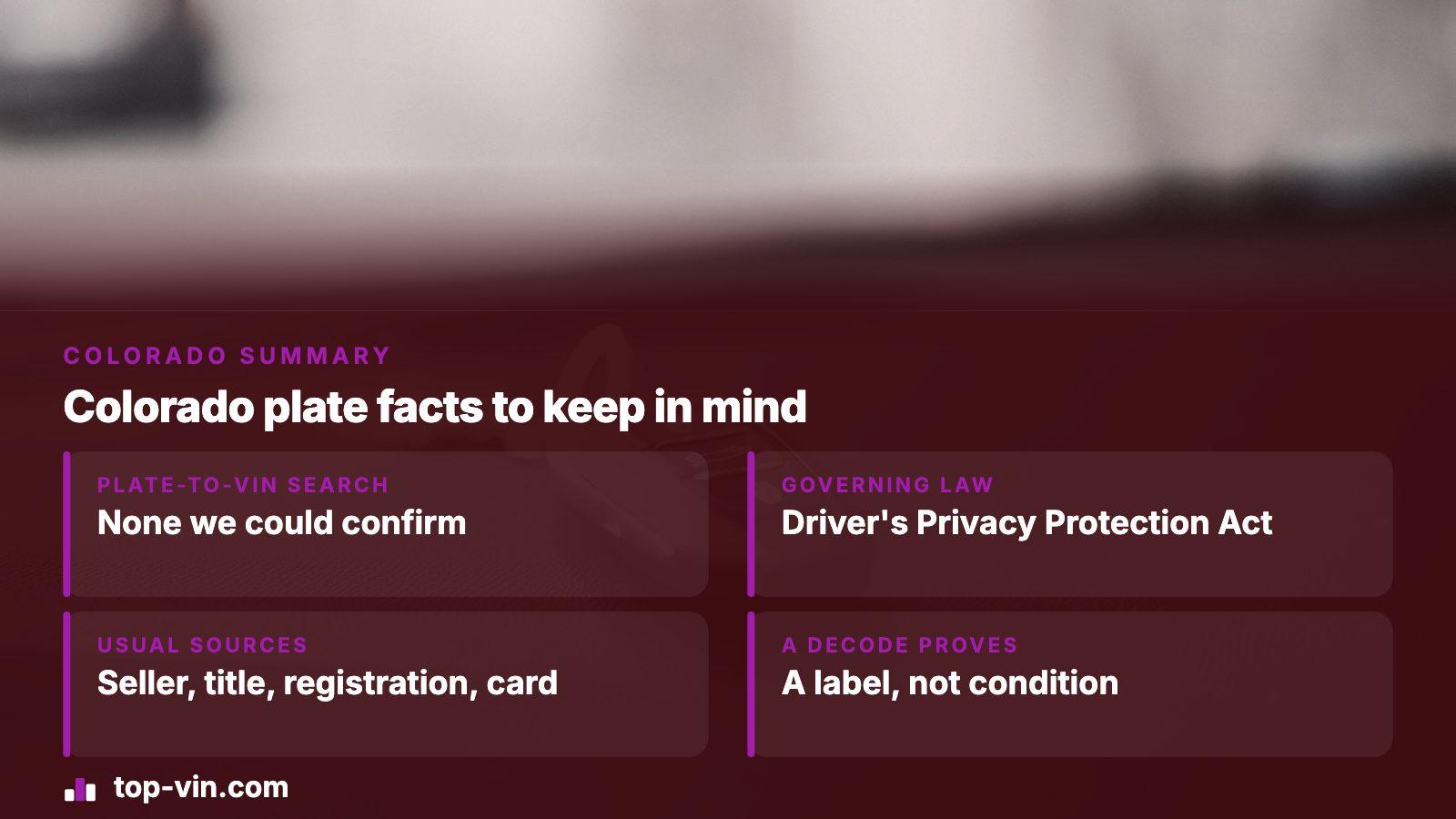
- None we could confirm
- Governing federal law
- Driver's Privacy Protection Act
- Best source of the VIN
- Seller, title, registration, insurance card
- TopVIN check
- Free preview, then one payment
What a Colorado plate can and cannot tell you
A plate is a registration tag. It points to a record held by the state, but the history buyers care about, such as title brands, damage files, odometer entries and theft flags, is filed against the vehicle identification number. That is why the search term is so popular and so often misleading: the plate is what you can see from the sidewalk, and the VIN is what every useful database wants.
Sites that promise an instant owner name or address from a plate are selling something the law restricts. TopVIN does not offer a plate lookup and does not return personal data. It starts from the VIN, which describes the car rather than the person who drives it.
The federal rule behind the refusal
Section 2721 of Title 18, U.S. Code, is the Driver's Privacy Protection Act. It restricts what a state motor vehicle department may release from its records. Personal information goes out only for listed purposes. Curious shoppers are not on that list, which is why a Colorado counter clerk will not read a VIN and owner file to someone who just photographed a plate.
- Agencies, courts and police acting within their duties.
- Insurers and insurance support organizations handling claims, fraud or underwriting.
- Parties in civil, criminal or administrative proceedings, including serving papers.
- Notifying the owners of towed or impounded vehicles.
- Licensed private investigators for an otherwise permitted purpose.
- A requester holding written consent from the person the record is about.
The statute also lets a state add uses of its own if they relate to operating a vehicle or public safety, and lets it charge an administrative fee for a record. Which of those apply in Colorado, and what the request looks like, is a question for the Colorado DMV; its website blocked our automated reading, so this page names no form or fee.
The quick routes to the VIN
Most buyers never need a records request. The number sits in plain sight on paperwork and on the vehicle, and an honest seller can read it to you in under a minute. Try these in order of effort.
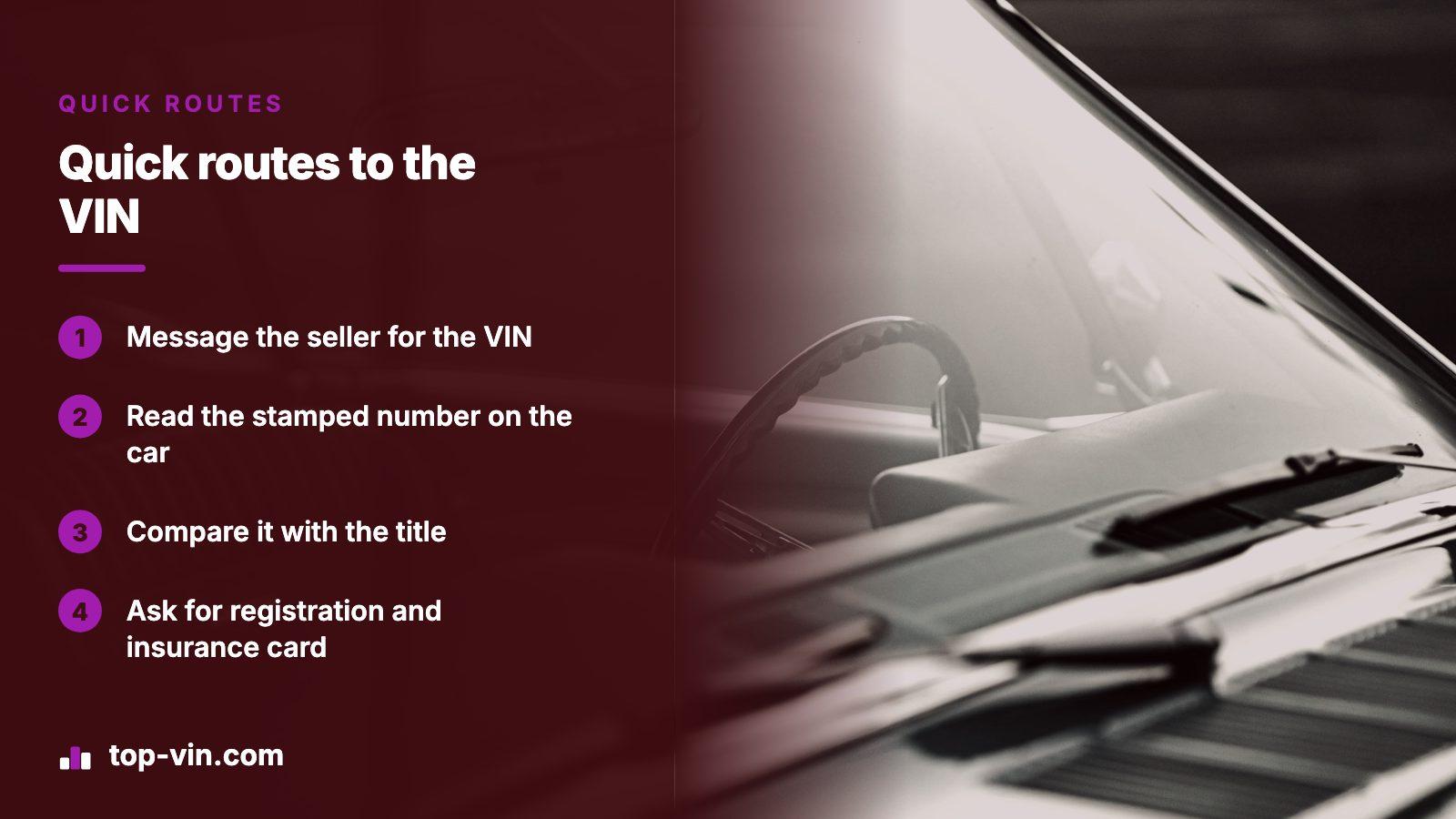
- Message the seller and ask for the VIN in writing before you drive out. A seller who stalls on a number stamped into the car is telling you something.
- Read the vehicle's own stamped number next to the title and compare every character.
- Ask to see the registration card, which should repeat it.
- Request the insurance card or a screenshot of the policy page, which names the insured vehicle.
- If you are standing at the car, read it off the vehicle yourself and photograph it.
Any two sources that disagree are a reason to pause. A mismatch can be a typo, but it can also be a swapped part or a doctored document, and that is worth settling before money moves.
If you have a legal reason to ask the state
Some people do have standing: an insurer working a claim, a party in a lawsuit, a tow operator notifying an owner. They go through the state's formal records channel and state the permitted use they rely on, usually with an administrative fee. A private buyer sizing up a car before purchase does not fit those categories.
Confirm the process with the DMV
We could not open the Colorado DMV's records pages, so we cannot quote its form name, fee or turnaround. Check the current steps on the DMV's own site, and read the permitted-use list before you sign anything that asks you to certify a purpose.
From VIN to report
Type the VIN into TopVIN and a preview comes up first, at no charge. Use it to see whether the number decodes to the vehicle you are actually looking at. When the year, make and model fit the listing, you can buy the whole report once; the pricing page has the amount.
For a used car in Colorado, read these parts slowly: title brands, damage and crash records, mileage entries, salvage or auction photos, liens and unresolved recalls. A lien matters because it can block a clean transfer, and a brand matters because it follows the car into every later sale.
Reading the results as a buyer
| What you see | What to do about it |
|---|---|
| Title brand such as salvage or flood | Ask for the story and repair records, then price the car as a branded vehicle or walk away. |
| Odometer reading lower than an earlier entry | Treat it as a rollback concern and ask for service receipts. |
| Active lien listed | Require the lender's release before you pay. |
| Theft record | Stop and verify with the police or the insurer before any deal. |
| Open recall | Book the free repair with a dealer for that brand after purchase. |
Federal title data comes through NMVTIS, a Justice Department program created to guard buyers against fraud and unsafe vehicles and to stop stolen cars from being resold. A clean report lowers risk but does not replace a test drive and an independent inspection.
What a decode does and does not prove
NHTSA's public VIN decoder returns the factory specification tied to the number. When a field comes back empty, NHTSA says that means it has no data, not that the feature is missing from the car. Apply the same caution to any report: a blank line is an unanswered question, not a good answer.
A decode also cannot tell you whether the plate on the car belongs to that car. Plates can be swapped, so the VIN printed on the vehicle is the anchor, and the plate is secondary.
What to do next
- Collect the VIN from two independent sources and confirm they agree.
- Run the free TopVIN preview and compare it with the listing.
- Open the full report if the preview matches; see the pricing page for current options.
- Verify the title copy and any lien release in person before paying.
- Arrange an independent inspection, especially if the report shows damage or a brand.
Where this information comes from
- Driver's Privacy Protection Act, 18 U.S.C. 2721 — The list of permitted uses for personal information in motor vehicle records.
- NMVTIS consumer information, vehiclehistory.gov — What the federal title system is for and where buyers can check a vehicle's history.
- NHTSA vPIC VIN decoder API — How NHTSA treats missing decoded values.
Sources and photos: Facts checked against the sources above in November 2026. Photos by Alejandro Escamilla, Dylan Michaud and Bence Balla-Schottner on Unsplash; diagrams by TopVIN.
Keep reading
- Vehicle registration lookup: what it shows and which check to addWhat registration records show and who can see them.
- Motor vehicle records: what a car buyer can see, and what stays closedHow state motor vehicle records differ from a vehicle history report.
- How to read a VIN: a left-to-right walkthrough with a worked decodeMake sense of each position in the number you collected.
- VIN verification: the four checks people mean and what each provesMake sure the car's own number agrees with its paperwork.
Frequently asked questions
Can I get a VIN from a Colorado license plate number?
Not through a public search we could confirm. Federal privacy law restricts state record releases to listed purposes. Buyers get the VIN from the seller, the title, the registration or insurance card, or the car itself, then run it through a history check.
Can TopVIN look up a Colorado plate?
No. TopVIN works from a VIN and does not return owner names or addresses. Enter the 17 characters and you get a free preview, followed by a one-time paid report if you want the full history.
Who may request Colorado vehicle records tied to a plate?
Federal law lists permitted users such as agencies, insurers, parties in legal cases and licensed investigators, plus anyone with the record subject's written consent. Ask the Colorado DMV for its current request steps and fees, because we could not read them.
What if the seller refuses to give me the VIN?
Take it as a red flag. The number appears on the title and on the vehicle, so there is rarely an honest reason to withhold it. Offer to meet at the car, photograph it yourself, and walk away if the number differs from the paperwork.
Is the TopVIN report free?
No, just the preview costs nothing. Past that, you pay one time for the report, never monthly; the pricing page shows the choices. Start with the preview so you know the VIN points at the correct car.
Now check the car itself
The guide explains what to look for. The report shows what this VIN has on record.