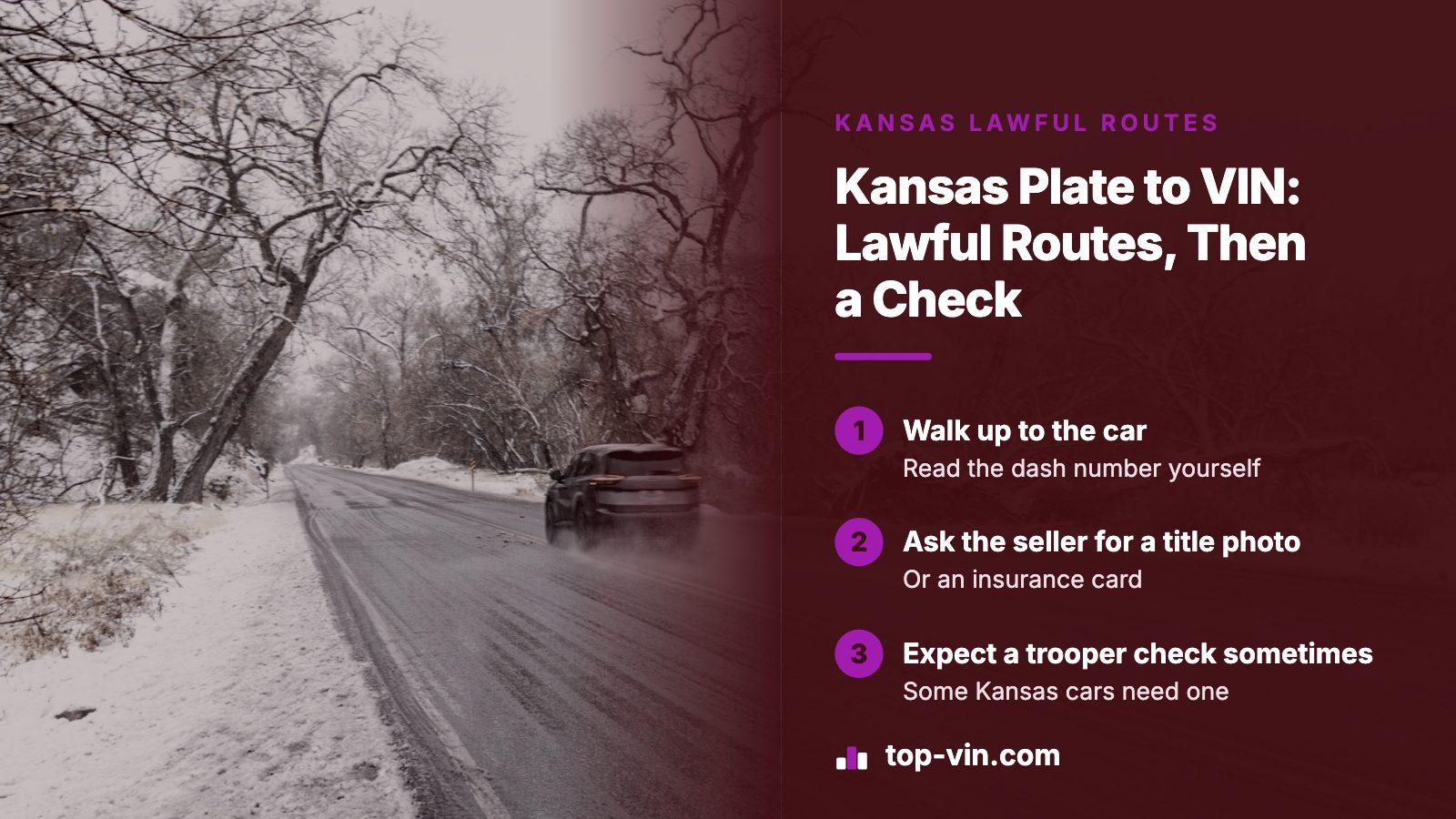
THE SHORT ANSWER
Private buyers get a VIN for a Kansas plate by asking the seller, reading the title or insurance card, or walking up to the car. The Driver's Privacy Protection Act narrows what state offices can release, and vetting a used car is not one of its listed purposes. Run the 17 characters through a TopVIN preview next.
- Quickest source
- Title or insurance card
- Federal limit
- Driver's Privacy Protection Act
- Used-car shopping
- Not a listed permitted use
- TopVIN step
- Free preview, then one payment
What a Kansas plate can and cannot give a buyer
A plate ties a car to a registration, and that registration ties it to a person. Shoppers search for a plate-to-VIN tool after spotting a truck in a driveway or a photo in a classified ad, hoping to read its history before calling the owner. The same shortcut, open to anyone, would let a stranger turn a license number into a name and a home address.
The Kansas Department of Revenue site would not open from our end, so this page says nothing about its records forms, fees or waiting times. Check the department's current pages before relying on any state request. What follows rests on the federal statute and on the Kansas Highway Patrol's own pages, both of which we read.
The federal rule behind the refusal
A federal privacy law, the DPPA, orders state licensing offices to keep the personal side of their vehicle files private. Staff and contractors may share it only for a purpose written into the law, and Kansas is bound like any state.
The approved purposes are narrow: court and government work, safety and theft matters, recall notices, an insurer working a claim, a tow yard contacting an owner, a licensed investigator, and an employer verifying a commercial driver. Someone holding the written consent of the person involved can also ask. Sizing up a used car is absent from the list.
A site that promises the owner's name
Sites that advertise an owner's name for a flat fee have no private arrangement with Topeka. If you have a real reason, such as a collision claim or a lawsuit, your insurer, the police or an attorney can make a lawful request for you.
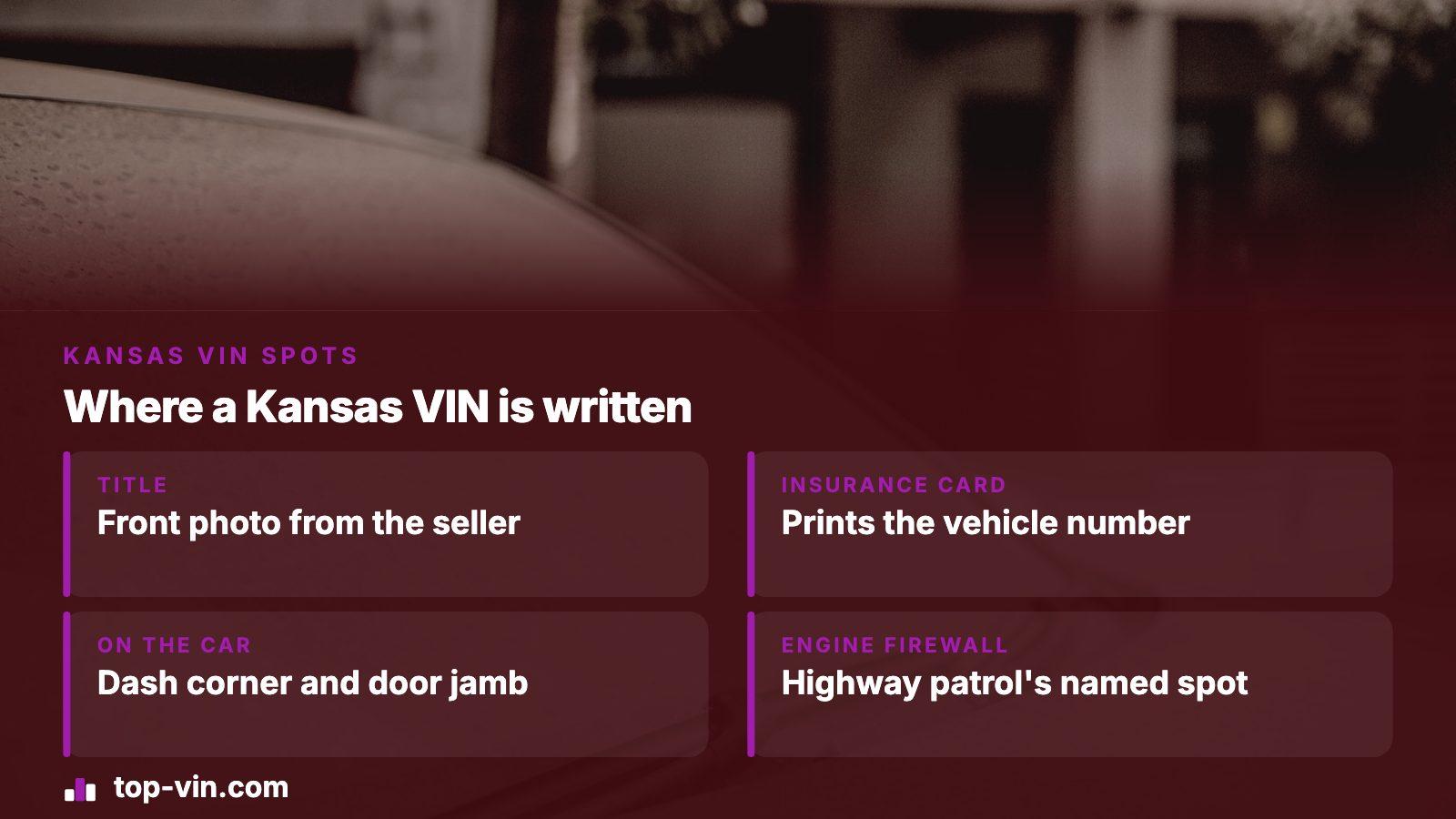
Where the VIN is already written down
You rarely need to file anything. Use whichever source you can reach fastest, and if possible read the number off two of them.
- The title. Have the seller text a sharp photo of its front before you drive out, then match the name on it to the person who meets you.
- The insurance card or policy page, which prints the vehicle number next to the car's description.
- Two spots on the car itself: the corner of the dash under the windshield by the steering wheel, and the sticker inside the driver's door opening.
- The engine firewall, where the highway patrol says the number is also stamped.
- The ad itself. Dealers usually print it, and a private seller can send it in seconds.
A seller who stalls on a simple request before you have even seen the car has told you something. Weigh it.
Check that the number belongs to the car in front of you
A search only helps if the number describes the car you will own. The Highway Patrol warns that every location on the vehicle should agree with the title, and that a missing or mismatched number is a reason to stop the purchase.
- Copy the 17 characters from the title.
- Read the dash and door-jamb numbers yourself and compare them character by character.
- Ask to see the registration and check that its plate is the one bolted to the car.
- Walk away if any one of those fails.
Why Kansas puts a trooper's eyes on some cars
Before some vehicles can receive a Kansas title and plates, the Highway Patrol's Motor Vehicle Enforcement program examines them. The state says the point is to protect buyers, make theft harder and choke off trade in stolen parts. Owners bring the vehicle, the original signed title, the purchase papers and a government photo ID. A new car sold by a dealer with no earlier title skips the step.
The completed MVE-1 form then goes to the county office for titling. Read what it proves with care: it shows an examiner matched the car to its paperwork. It says nothing about crashes, floods or a brand another state applied, which is where a history record comes in. A jumped title, where the seller never put the car in their own name, has to be fixed before an inspection can be finished.
Running the VIN in TopVIN
Enter the 17 characters at TopVIN and open the preview, which is free to view and shows whether the record has anything worth buying the report for. The full report is one payment covering one car, no subscription involved, and pack options sit on the pricing page.
| Check this first | Why it matters on a Kansas car |
|---|---|
| Title brands | Salvage, rebuilt, flood and odometer brands can come from any state a car passed through |
| Theft record | A stolen car can carry a clean-looking title |
| Odometer readings | A jump or a drop between records is a warning |
| Liens | An open lien can follow the car to the new owner |
| Open recalls | Free repairs you may be owed |
Pair it with the free NICB VINCheck, which the Highway Patrol recommends for spotting a stolen or total-loss vehicle.
Why a clean VIN still needs a skeptical eye
The patrol describes a cloned vehicle as one whose identifying features were altered to hide what it is, usually so thieves can sell a stolen car. It says clones are often listed $20,000 or more below fair market value, and that recovered clones generally came with out-of-state titles. It also advises caution with social-media listings and with sellers who only take cash.
If you suspect a clone
Do not confront the seller. Ring the Highway Patrol's main line, 785-296-6800 (a wireless phone can also dial *47), and pass on what you found.
What to do after the report
A clean record is a reason to continue, not a reason to skip a mechanic's inspection. A record with a brand, a theft flag or a mileage jump is a reason to renegotiate or leave.
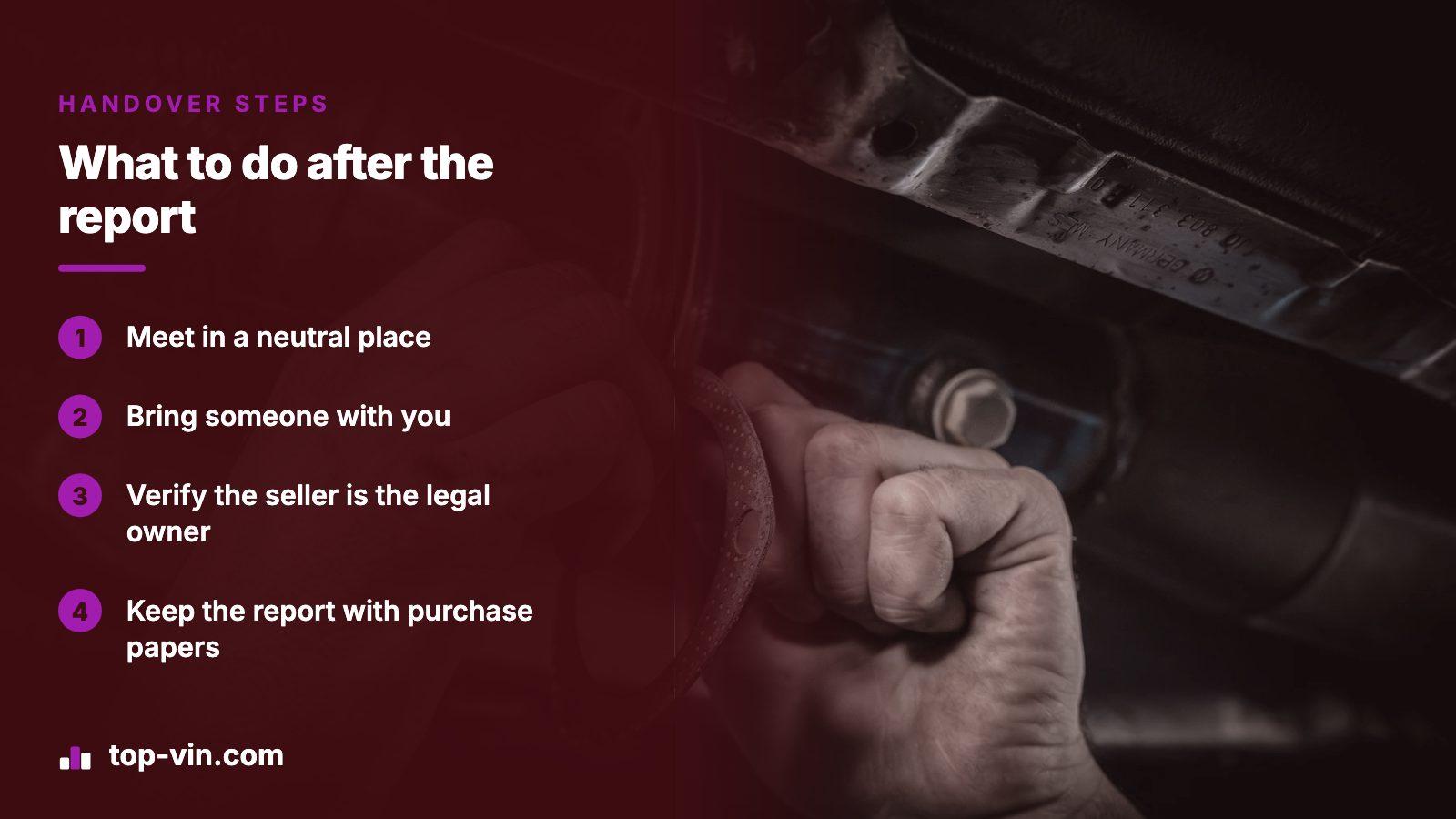
- Meet in a neutral place and bring someone with you.
- Verify that the person selling is the legal owner named on the title.
- Ask any seller of an out-of-state car how the Kansas inspection will be handled before you pay.
- Keep the report with your purchase papers.
Where this information comes from
- Kansas Highway Patrol: Arrange a VIN Inspection — What the inspection program is for and what to bring.
- Kansas Highway Patrol: VIN inspection FAQ — MVE-1 next steps, new cars, jumped titles.
- Kansas Highway Patrol: Beware of buyer scams — Cloned cars and where to read the VIN.
- Kansas Highway Patrol: Researching a used car — The patrol's advice to run the VIN and use NICB VINCheck.
- 18 U.S.C. 2721 on GovInfo — The federal limits on releasing motor vehicle record data.
Sources and photos: Facts checked against the sources above in November 2026. Photos by Zoshua Colah, Martin Fennema and JavyGo on Unsplash; diagrams by TopVIN.
Keep reading
- VIN inspection: what the inspector checks and what a VIN check addsHow a physical VIN inspection works and what it proves.
- VIN cloning: why a VIN check can pass a stolen car and what catches itHow cloned numbers hide stolen cars.
- Motor vehicle records: what a car buyer can see, and what stays closedHow a state record differs from a history report.
- Vehicle registration lookup: what it shows and which check to addWhat a registration shows and what it keeps private.
Frequently asked questions
Is there a way to find a VIN from a Kansas plate number?
Not through the state, if you are a private buyer. Federal privacy law lets motor vehicle offices share personal data only for specific listed purposes, and vetting a used car is not one. Ask the seller, read the title or insurance card, or look at the car, then run that number.
How is a Kansas plate search different from a VIN check?
A plate leads to a registration and its owner, which the law shields. A VIN check follows the vehicle itself: title brands, odometer entries, theft and liens. When you are buying, the vehicle's record is the part that protects your money.
Will a Kansas VIN inspection show a car's past?
No. It shows only that the car and its paperwork match. A vehicle can pass and still have a salvage brand, flood damage or an old collision behind it, which is why the number also belongs in a history record.
Where do I find the VIN on a car I am buying in Kansas?
The Highway Patrol lists the dash by the driver's side windshield, the driver's door jamb, the engine firewall and the insurance papers. All should agree with the title. If one differs or is missing, the patrol's advice is to skip the purchase.
How do I report a suspected cloned or stolen car?
Leave the seller alone and contact law enforcement. The Kansas Highway Patrol takes reports at 785-296-6800, or *47 on a wireless phone. Give them the VIN, the listing and anything you noticed on the paperwork.
Now check the car itself
The guide explains what to look for. The report shows what this VIN has on record.