THE SHORT ANSWER
We found no open Maryland service that converts a tag into a VIN. State law lets the MVA release vehicle records only for a purpose it approves, and federal law narrows personal data further. Have the seller text the number, copy it from a title, registration slip or policy card, and run a TopVIN preview on those 17 characters.
- Public plate-to-VIN search
- None we could confirm
- MVA record request
- Mailed form, approved purpose
- Best key for a history check
- The 17-character VIN
- TopVIN
- Free preview, then one payment
Why a Maryland plate gets you nowhere as a shopper
A tag number is a pointer into a registration file. That file ties a vehicle to a person, and the agency treats the person side as protected. The car side lives under the VIN: whether a title was branded, what damage was logged, how the odometer moved, which auction lots carried photos. That is why serious history products start there.
TopVIN follows the same logic. It has no plate box and returns no owner name, address or phone number. Type the VIN, read what the records say about the vehicle, and decide.
A warning about plate-search sites
A site advertising a Maryland tag-to-VIN-and-owner answer for a few dollars is selling something the state itself restricts. We could not verify that any such service works lawfully, and we pass no verdict on them. Begin with the VIN.
What Maryland and federal law allow the MVA to release
Maryland's Transportation Article treats most MVA files as public records, with exceptions for anything the law makes confidential. Where listings of registration data are concerned, the Administration may furnish them only if it approves the reason for the request, it must charge a fee, and the recipient may not use the data for any other purpose than the one given.
Personal information gets extra fences. The MVA may not disclose it for surveys, marketing or solicitations without the person's written consent, and not at all for telephone sales. A driver can allow disclosure when applying or renewing, or by writing to the Administrator. Photos and signatures are never open to the public.
Above all of this sits the federal Driver's Privacy Protection Act. Curiosity about a car you saw online is not on its list, so a shopper cannot cite it.
The purposes that do qualify
The federal statute names its permitted uses. These are the ones people most often mistake for a car purchase:
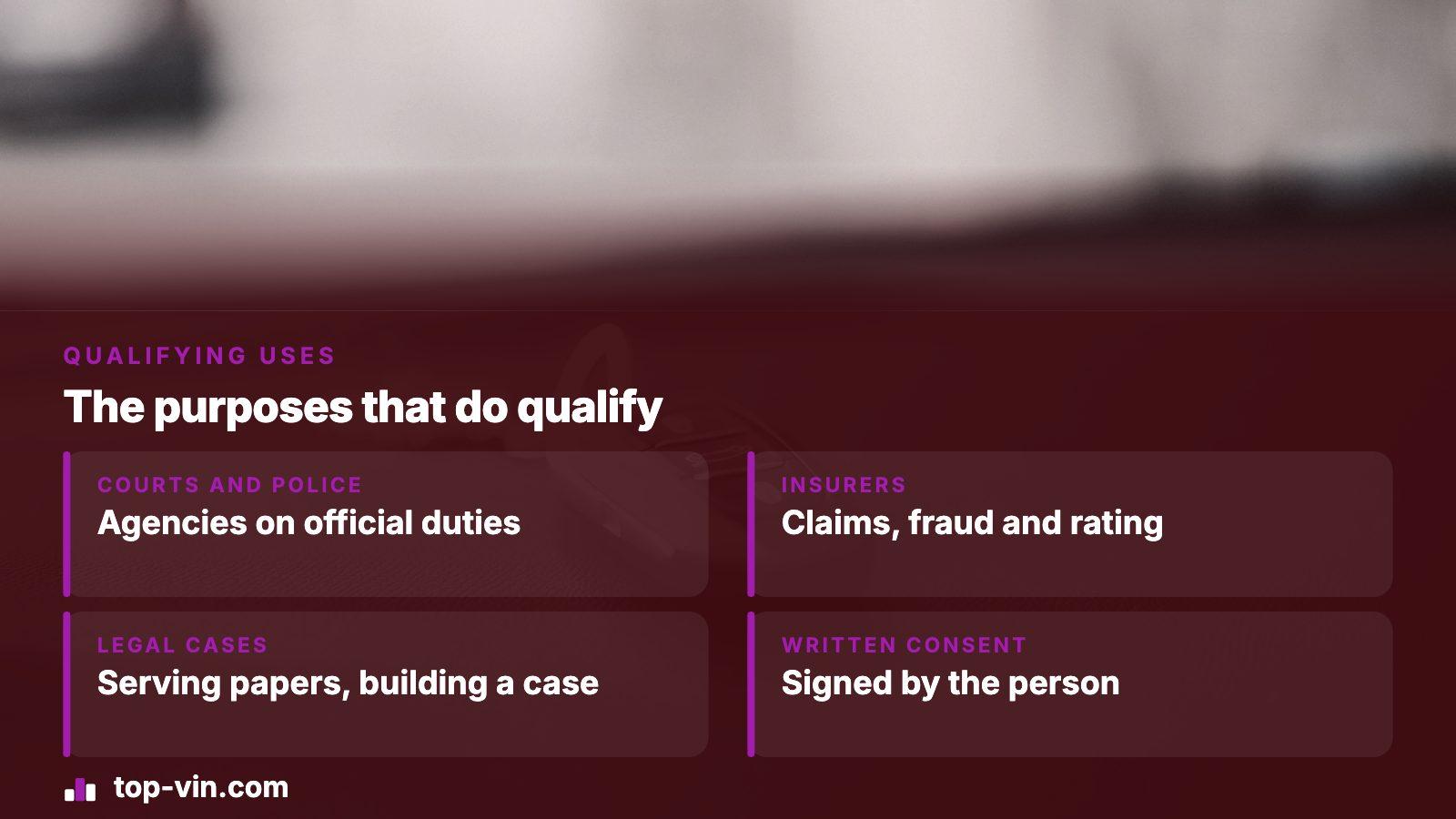
- Courts and law enforcement, plus other agencies carrying out their official work.
- Insurers investigating a claim, fighting fraud or setting rates.
- Anyone serving papers or building a case in a legal proceeding.
- Businesses that must tell an owner a car was towed or impounded.
- Licensed private investigators, for a use the law otherwise permits.
- A requester holding the signed consent of the person the record describes.
Buying a used car privately is not on the list. The route that works for a buyer is not the state file at all, it is the seller's own paperwork.
How to get the VIN without the state's help
Anyone selling a car can produce the number in under a minute. Work through these until it is in writing.
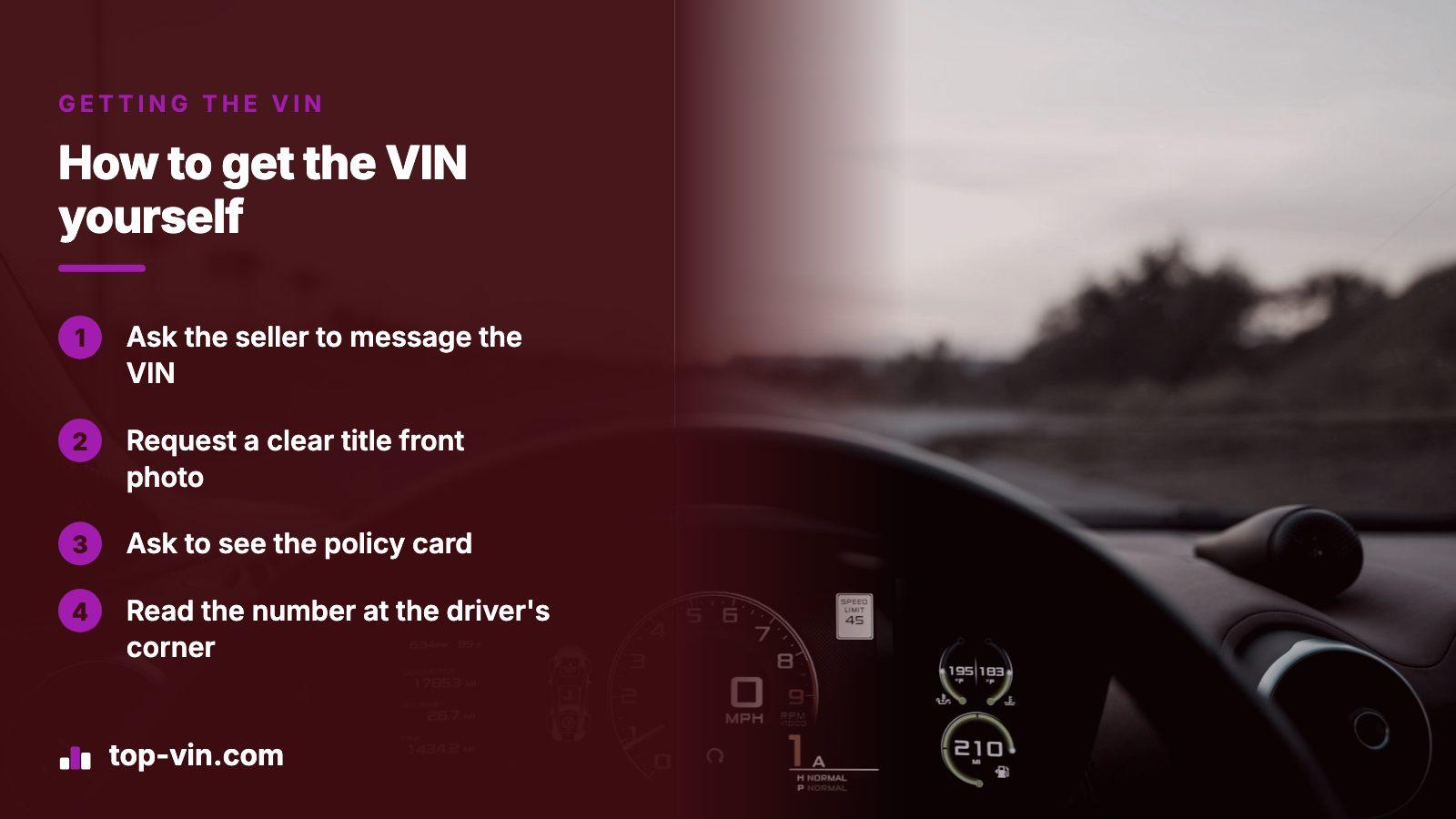
- Ask the seller to message you the VIN as typed text before you drive out. Typed beats spoken.
- Ask for a clear picture of the title's front side. The registration card repeats the same number.
- Ask to see the policy card or coverage summary, which names the insured vehicle.
- Walking up to the car, bend down by the driver's corner of the glass and read the number there, then open the door and read the frame label.
- Line the copies up and read them character by character. They should all agree.
When the copies disagree
One transposed digit may be a typo. A dash number that differs from the title is another matter, and it can point to a swapped part, a clerical slip or a cloned identity. Stop until someone explains it.
If you really have a permitted purpose
A claims adjuster, a tow operator or a litigant with a real need has a formal path. The Justice Department's October 2024 list of state record-request methods points Maryland requesters to a paper application sent by post, the MVA Request for Record, which the MVA site numbers DR-057. The mailing address is the MVA headquarters in Glen Burnie, with vehicle records handled in a different room than driving records.
We could not open the MVA's own pages, which showed a security check to automated readers, so we cannot quote a fee, a processing time or the form's current wording. Download the form from the MVA directly and read its instructions before sending anything. Expect to state your purpose, and expect the MVA to decide whether it qualifies.
Running the VIN through TopVIN
Enter the VIN in the search field on the home page. The preview costs nothing and confirms that the number decodes and that records are on file. Going further means one report payment, with no recurring charge. Amounts sit on the pricing page.
TopVIN is built for head-to-head use, so run it on each finalist rather than one car. Preview every candidate, then buy the report only for the two you would actually pay for. That keeps the spend small and the comparison fair.
What to look at first on a Maryland car
National title data is fed by titling offices, scrap yards, recyclers and carriers, so a brand a car earned elsewhere can follow it into Maryland. Read these entries in order.
| Entry | What it tells you | What to do if it looks wrong |
|---|---|---|
| Title brand | Whether the car was ever labeled junk, salvage or flood | Ask the seller about it and have a mechanic inspect the structure |
| Odometer readings | Whether the mileage climbs steadily over time | Compare with the dash and the title, and ask for service records |
| Damage and auction photos | What the car looked like after a loss | Match the photos to the repairs you can see |
| Lien records | Whether a lender still has a claim | Do not pay until the seller shows a release |
| Theft records | Whether a theft report exists | Walk away and tell the police if the VIN is flagged |
Guarding against a cloned or altered identity
The Justice Department explains VIN cloning as taking a genuine number off one car and putting it on a stolen twin of matching make, model and year. The paperwork then looks clean. A history report cannot spot every clone, but a history that does not fit the car in front of you is a clue.
Decode the VIN with NHTSA's free tool and set its make, year and body style beside the car you are looking at. A decoded mismatch, such as a different engine or trim, is worth a hard question. NHTSA notes that a blank field in its output means no data, not that a feature is missing, so treat gaps with care.
A short plan before the money moves
- Write the VIN down yourself and test it against the paper title and the car.
- Preview each candidate and save the paid report for the finalists.
- Match the odometer on the report to the dash.
- Confirm any lien is released before you hand over payment.
- Hire a mechanic to inspect any car that carries a brand or has a hole in its history.
If a seller keeps ducking the VIN request, that is your answer. Look at the next listing.
Where this information comes from
- DOJ NMVTIS: State Vehicle Record Request Information — How a Maryland vehicle record request is made, by form and by mail.
- DOJ NMVTIS: For Consumers — What national title data covers, what a brand is and how cloning works.
- Maryland Transportation Article 12-111 — Which MVA records are public and which are shielded.
- Maryland Transportation Article 12-112 — The approved-purpose rule for registration listings and the limits on personal information.
- Federal statute on motor vehicle record privacy (section 2721) — The permitted uses under the Driver's Privacy Protection Act.
- NHTSA vPIC API — The federal VIN decoder and how to read blank fields.
Sources and photos: Facts checked against the sources above in November 2026. Photos by JavyGo, Dennis Eusebio and Bence Balla-Schottner on Unsplash; diagrams by TopVIN.
Keep reading
- Where the VIN sits on a title, and what to do nextWhere the number sits on a title and what to compare it with.
- Is the VIN on the insurance card? What to check before you trust itAnother document that names the vehicle and its VIN.
- VIN lookup by owner name: what the law lets a buyer seeWhy a name is also a poor starting point for a car check.
- Motor vehicle records: what a car buyer can see, and what stays closedHow a state record differs from a vehicle history report.
Frequently asked questions
Can I find a VIN from a Maryland license plate number?
Not through any open route we could confirm. The MVA releases records only for approved purposes. A buyer does better by asking the seller for the number, or reading it off the title, registration or policy card, and then running that VIN through a history check.
Will the MVA reveal who owns a car if I give it the tag?
Not to casual requesters. Names and addresses are personal information, shielded by the federal privacy act and by Maryland's own limits. Insurers, courts, police and a few other listed parties can receive them. A shopper normally has no qualifying purpose.
How do I request a Maryland vehicle record if I qualify?
The Justice Department's state list tells requesters to post the MVA's Request for Record form to the Glen Burnie address it prints. We could not open the MVA's pages, so check the form's instructions, fee and current requirements on the MVA site before you send it.
Is a Maryland plate lookup website legitimate?
We could not confirm that any website can lawfully return a Maryland VIN or owner from a tag, and we pass no verdict. Think twice before paying for a promise the state does not make itself. The VIN is the dependable key.
What does the TopVIN preview show?
The preview is free and confirms your VIN decodes and that history records exist. The full report is a single payment, nothing more. TopVIN offers no plate search and never shows an owner's contact details.
Now check the car itself
The guide explains what to look for. The report shows what this VIN has on record.