
THE SHORT ANSWER
Look in the block that describes the vehicle, not the owner or lienholder blocks. The field is usually labeled VIN or vehicle identification number and holds 17 characters. Check it against what is stamped on the vehicle, then order a history search. If the two numbers differ by even one character, stop the sale until the seller or the DMV explains why.
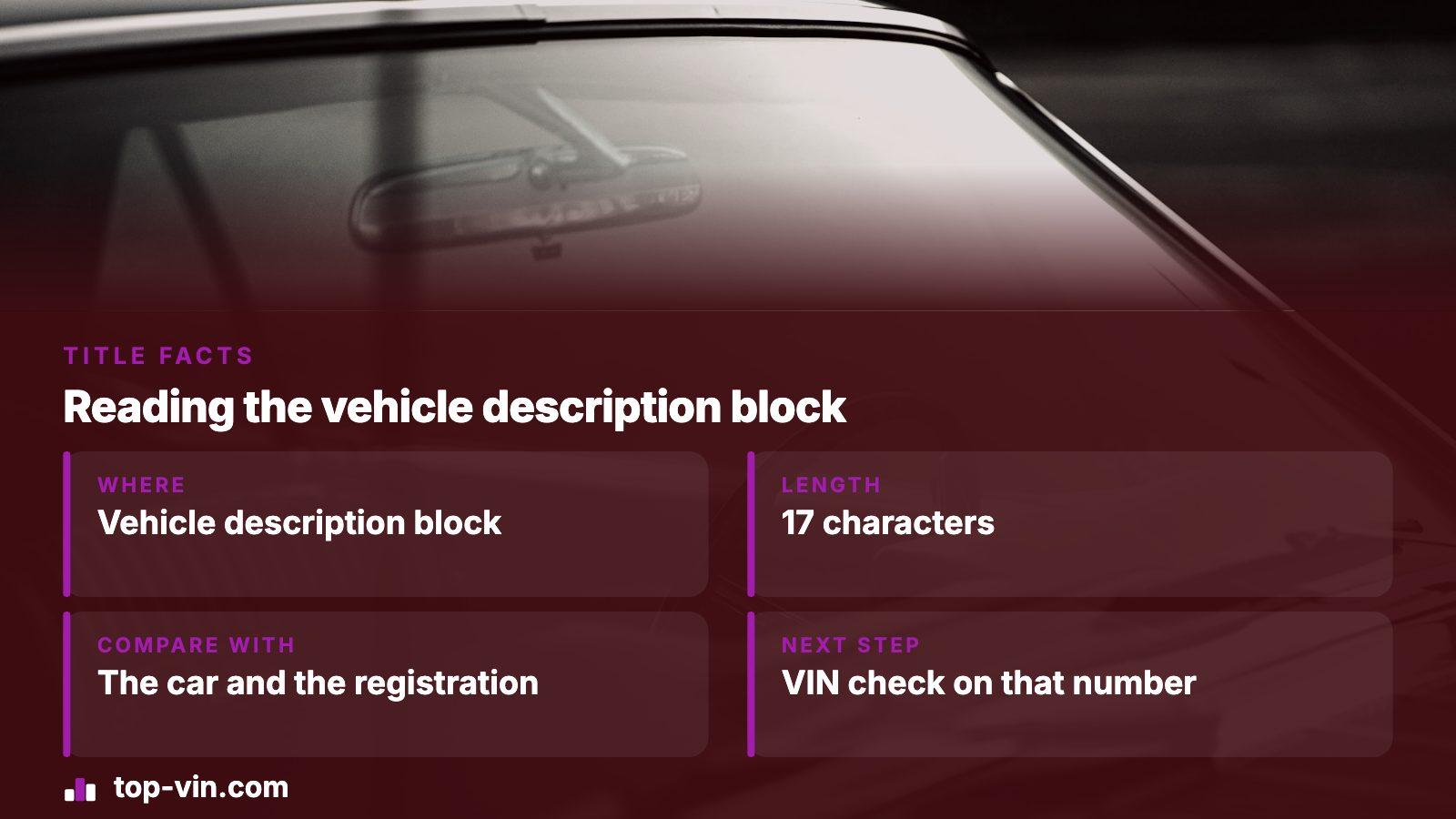
- Where
- Vehicle description block of the title
- Length
- 17 characters
- Compare with
- The number on the car, plus the registration
- Next step
- A VIN check on that exact number
Finding the VIN field on the paper
States design their own titles, and none of the pages we opened publishes a map of the form, so there is no single spot to promise. What holds across the layouts you will meet is the grouping: the title splits into who owns it, who holds a lien, and what the vehicle is. The vehicle part carries the identification number.
Scan that part for a box tagged VIN, vehicle ID or something close. Next to it you will normally see the model year, the maker's name and the body style. If you hold a photocopy or a phone picture of the title, zoom until each character is separate, because a blurred 8 and 0 will send you down the wrong road later.
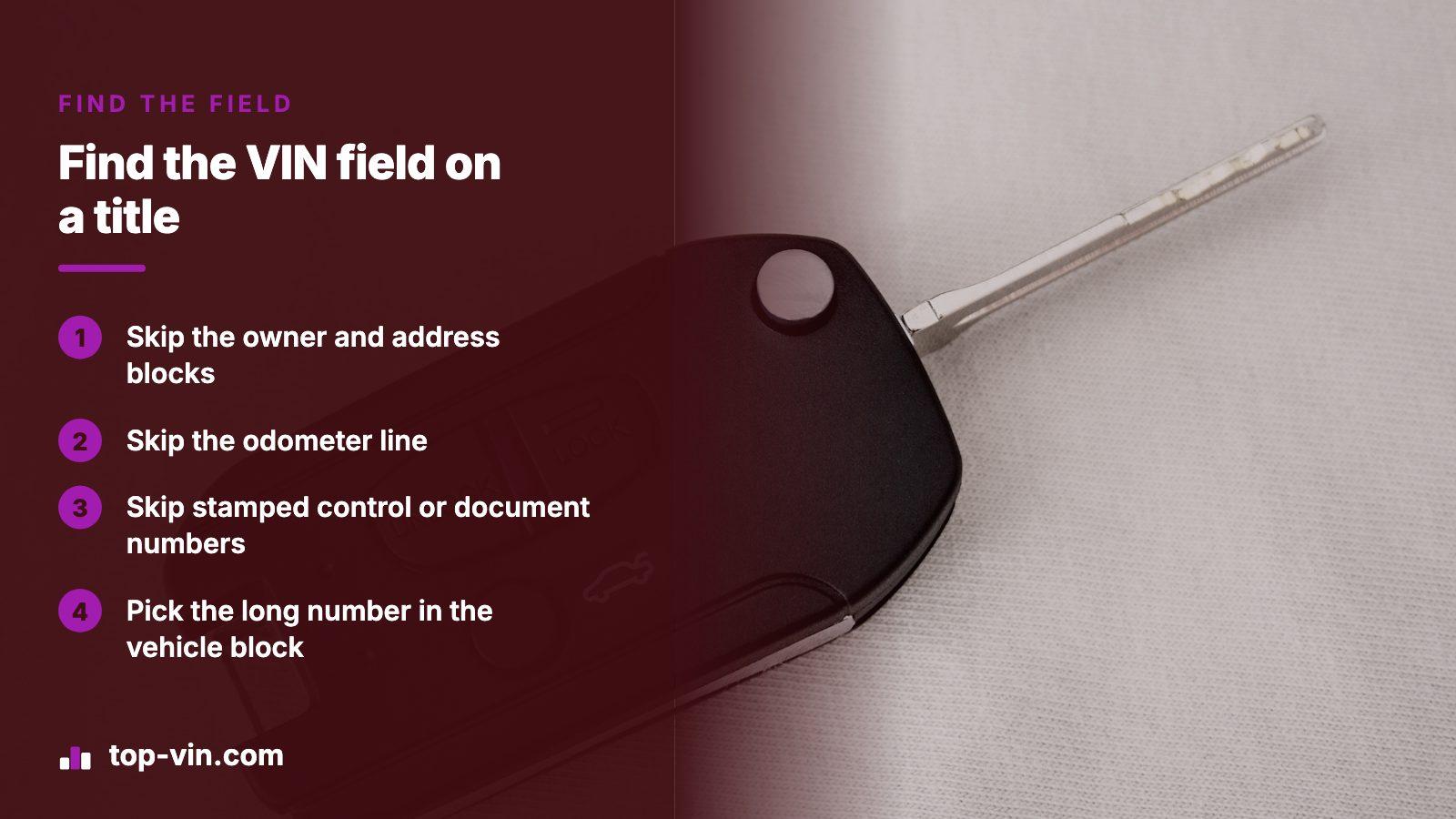
- Skip the owner and address blocks; they show no vehicle number.
- Skip the odometer line; that is a mileage statement, not an ID.
- Skip any stamped control or document number; it identifies the paper, not the car.
- If two long numbers sit side by side, the one with 17 characters is the VIN.
Matching the title to the actual vehicle
A title proves nothing until its number agrees with the metal. Go out to the vehicle and peer through the glass at the driver's corner, low on the windshield. NHTSA says that spot holds the vehicle's one-of-a-kind 17-character VIN, and the registration card repeats it.
Read both numbers aloud, one character at a time, in daylight. Letters and digits that look alike cause most honest mismatches, but a title clerk's typo and a swapped dash plate look identical from where you stand, so treat every difference as real until proven otherwise.
Why the second source matters
California's DMV leans on the federal label as a backup place to confirm a VIN, and orders a hands-on inspection when certificates disagree with its records. Borrow that habit: a second spot on the car should echo the title.
Signs the number or the paper is wrong
Texas DMV advises buyers to check that the dash number exists, sits firmly and shows no sign of tampering, that nobody repainted the plate, and that the stamping resembles factory work. It adds that thieves sometimes lift a plate from a wrecked twin and fit it elsewhere.
Put that advice next to the paper. A title can be genuine and still describe a different car from the one in the driveway.
| What you see | What it could mean | What to do |
|---|---|---|
| Title number differs from the dash number | Clerical error, wrong paperwork, or a swapped plate | Walk away until the DMV or seller documents the reason |
| Dash plate looks repainted or loose | Possible tampering | Do not buy; have the VIN verified |
| Dash number and door label disagree | Body parts or plates from different vehicles | Ask for an independent inspection |
| Title is missing | Lost paper or a sale without proper ownership | Seller applies for a replacement first |
Running the check on the number you copied
Once the title and the car agree, type that VIN into a history search. Our preview costs nothing and hints at what records exist. The complete report is a single payment, with the choices listed on the pricing page.
What you want from the report is the story the paper cannot tell: whether a brand has ever been recorded, what the odometer history looks like, and whether the car turned up in damage or salvage records. A clean-looking title only reflects the latest state that issued it, and a brand may vanish once a car is retitled across a state line.
Federal records back the idea. The Justice Department's NMVTIS program aims to help states and police discourage title fraud, and its shopper tips suggest pairing an inspection with title, odometer and some damage history.
What the seller should hand over
For Texas, the DMV names what a buyer should collect: a signed title with sale date and mileage entered, the Form 130-U application, plus lien releases or a power of attorney if any apply. Those names are Texas-specific, but the logic carries anywhere. Every signature and release should be on paper before you leave.
A lien matters more than it sounds. If a lender still appears on the title, the seller cannot pass clean ownership until that lender releases it, so ask to see the release document rather than a promise that one is coming.
- Compare the title VIN with the car and the registration.
- Look at the signature lines and lien section.
- Run the VIN through a history check.
- Get the title processed within the time your state allows.
Time limits that start after a sale
Texas requires the buyer's name on the title within 30 days of the sale, and late filing can bring penalties. California says a change of owner or lienholder must be reported within 10 days. These are two states' rules, not a national standard, so check your own DMV's page.
The deadline is one more reason to run the check first. Fixing a title problem is far easier before the transfer than after your name is on the record.
If the title is lost or the numbers need fixing
California handles a missing title with its Application for Replacement or Transfer of Title, form REG 227, which must be completed before a transfer, and a notary is needed on one section when a lienholder is listed. That form is California-specific. Your state will have its own replacement process.
When the VIN on a title is simply wrong, the usual remedy is a correction through the DMV, sometimes with a physical verification of the car. Do not alter the paper yourself; a title with handwritten changes is a bigger problem than a typo.
Using the results before you commit
Add NHTSA's recall search to your routine. Using it is optional; it tells you if the vehicle has a recall still unrepaired, though a brand-new announcement may not list every affected VIN yet.
Then weigh everything together: the title matches the car, no brand or odometer surprise in the history, a clean lien section and a fair inspection. If any one fails, renegotiate or leave.
Where this information comes from
- Texas DMV: Buying or selling a vehicle — Documents to request, dash VIN and plate checks, the title deadline.
- California DMV: Title transfers and changes — Reporting window, missing-title form and notary rule.
- California DMV: Vehicle verifications — When a VIN mismatch triggers verification and the safety label's role.
- NHTSA: Check for recalls — Where the VIN sits on the car and what the recall search covers.
- NMVTIS: Used car buying tips — Why to pair an inspection with a title and odometer history report.
Sources and photos: Facts checked against the sources above in November 2026. Photos by Carrie Allen www.carrieallen.com, Shadow Photography and Dylan Michaud on Unsplash; diagrams by TopVIN.
Keep reading
- VIN verification: the four checks people mean and what each provesHow a VIN is confirmed against the vehicle itself.
- Is the VIN on the insurance card? What to check before you trust itAnother paper that carries the same number.
- How to find a VIN without the car in front of youOther places to read the number when you cannot get to the car.
- VIN cloning: why a VIN check can pass a stolen car and what catches itWhat a swapped or copied VIN looks like.
Frequently asked questions
Is the VIN on a title the same as on the car?
It should be identical. The title describes the vehicle by its VIN, so any difference between the paper and the number on the dash or door label is a reason to pause. Ask the seller to explain, and contact the DMV before paying anything.
What if the title has no VIN I can read?
Request a clear copy or see the original in person. A smudged or cut-off field makes the document useless for a check. If the original is damaged, the owner can apply to the DMV for a replacement title before selling.
Is a photo of the title enough to start a VIN search?
Yes, as long as the number is legible and you confirm it against the car afterward. A photo can hide a typo or an edit, so the photo only starts the process; matching the physical vehicle finishes it.
Does a clean title mean a clean history?
No. A title shows the status in the issuing state at that moment. Brands, odometer problems and damage records can sit in other databases, so a history check on the VIN adds information the paper alone cannot give.
Who do I call if the numbers do not match?
Start with the seller, then the state DMV that issued the title. Some DMVs require a physical verification of the vehicle when certificates and records disagree, and they can tell you what the fix involves.
Now check the car itself
The guide explains what to look for. The report shows what this VIN has on record.