THE SHORT ANSWER
A Virginia plate alone will not give an ordinary shopper a VIN. Vehicle and owner data held by the DMV is privileged under the Code of Virginia and released only to listed requesters, and the federal Driver's Privacy Protection Act narrows it further. Read the VIN off the title, registration, insurance card or the car, then enter it at TopVIN for a free preview.
- Public plate-to-VIN tool
- None we could confirm
- Virginia rule
- DMV vehicle and owner data is privileged
- Ordinary routes
- Seller, title, registration, insurance card, the car
- TopVIN
- Free preview, then one payment
The short version for a Virginia buyer
Shoppers lean on the plate because it is the only identifier readable from the curb. The trouble is that every record worth reading about a used car hangs on the VIN: title brands, damage entries, odometer readings, theft flags. A plate only points into the registration system, and Virginia decides who may follow that pointer.
Sites that promise an instant VIN and owner from a Virginia plate are selling something the rules fence off. TopVIN does not run plate searches and never shows an owner's name or address. It begins where the useful data begins, with the 17-character number stamped on the car.
What the Code of Virginia says about DMV records
Section 46.2-208 of the Code of Virginia sorts four kinds of DMV data as privileged: personal information, driver information, identification card information and vehicle information. Vehicle information there means descriptive vehicle data plus title, registration and activity data, with crash data carved out. The Commissioner may release it only under the conditions the section lists.
That list is short on casual shoppers. It names the person the record is about, a parent or guardian, an authorized agent, and the vehicle's owner. It also names insurers, businesses, rental companies, courts and government bodies, each with its own limits. The statute page lists several versions that take effect on separate dates, so read the live text before relying on a detail.
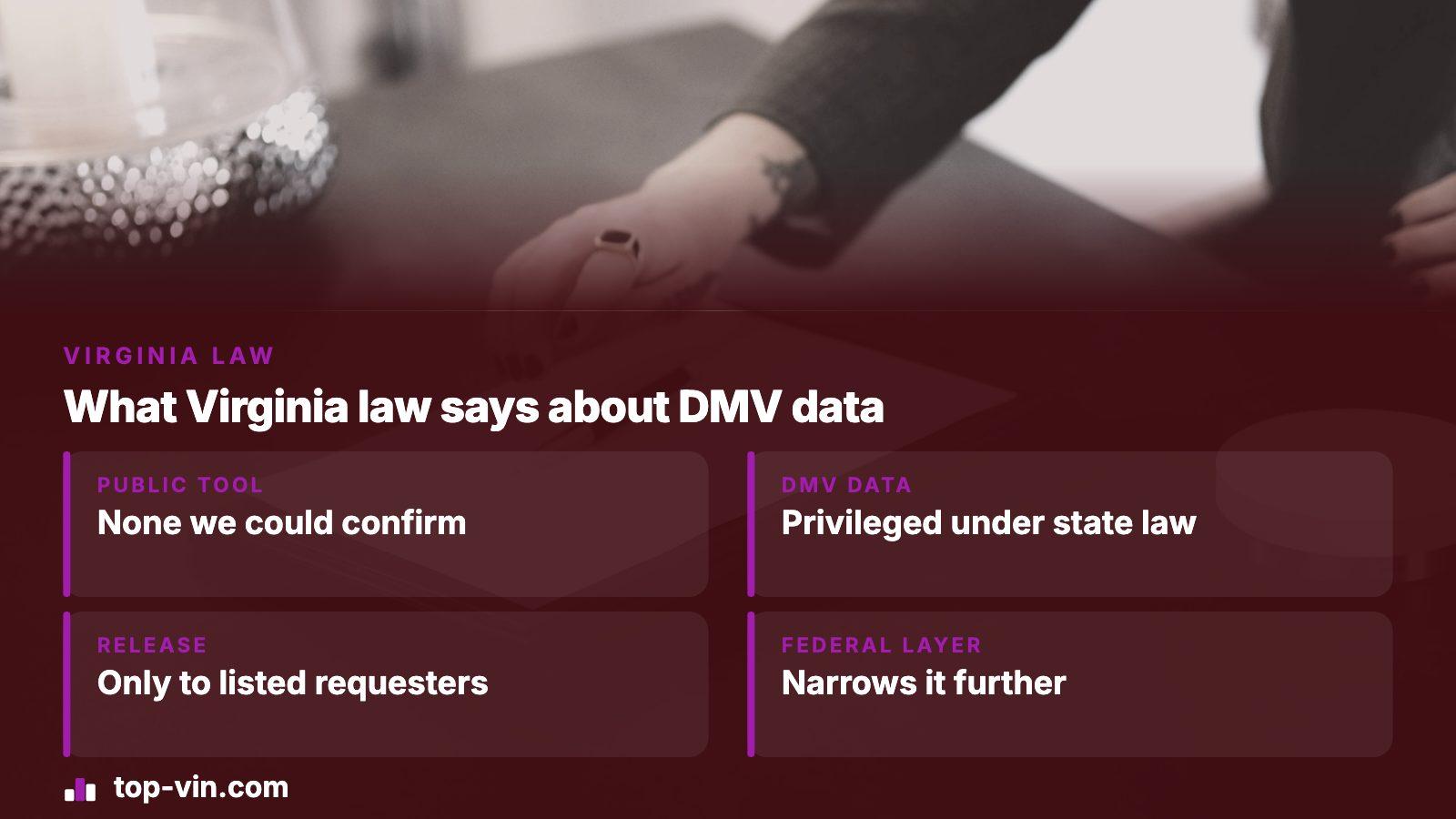
Who can actually request what
| Requester | What the statute lets them ask for |
|---|---|
| Record subject or vehicle owner | Their own information, with identity verified |
| Insurance carrier or surety | Records on a person under the title, by written request |
| Business organization | Vehicle information only, with no personal or driver data |
| Rental or leasing company | Driver information, with older convictions and crashes trimmed |
| Government, police, prosecutors, courts | Records including a sealed certificate linking a plate to an owner |
Notice the pattern: each route rests on a relationship or an official function. Wanting to buy the car next door is not one of them. The DMV's own request forms and fees live on its website, which refused our automated access, so TopVIN prints no form name or price. Ask the DMV for its current process if you believe you qualify.
The federal layer: permitted uses under the DPPA
Even where Virginia would release data, a federal statute, the Driver's Privacy Protection Act, stops any state DMV from releasing personal details out of a vehicle record unless one of its listed uses fits. The list covers government work, safety and recall matters, fraud checks by a business on information a person submitted, court proceedings, insurance claims and underwriting, towed-vehicle notices, licensed investigators, commercial driver verification and toll operations.
Consent is the other door
A requester can also qualify by showing written consent from the person the record describes. Resale is limited too: whoever passes the data on must keep a five-year log of recipients and purposes.
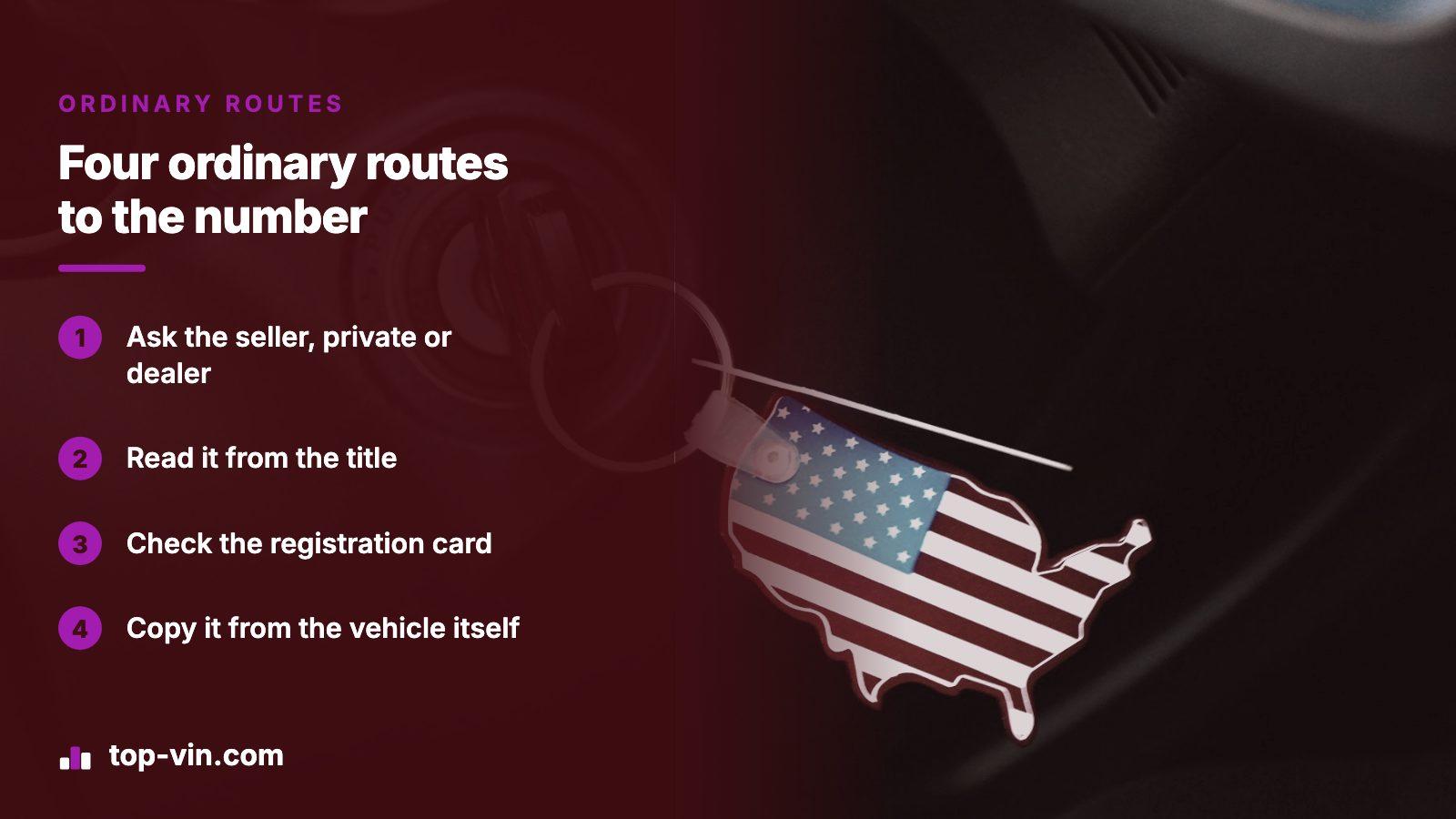
Five ordinary ways to get the VIN
- Ask the seller. A private seller or dealer who will not share the VIN before a visit has told you something.
- Read the title. The number is printed on the certificate along with any brand the state has recorded.
- Check the registration card. It repeats the VIN for the vehicle it covers.
- Look at the insurance card or policy page, which often lists it as well.
- Last, copy the number from the vehicle and set it beside every document. Every source should agree, character for character.
Any mismatch between the car and the papers is worth stopping for. It can mean a typo, or it can mean a title that does not belong to that vehicle.
Running the VIN through TopVIN
Enter the VIN at TopVIN and a preview opens before you pay anything. Compare the decoded year, make and model with the listing and the vehicle in front of you. If they match and you want the detail, one purchase unlocks the report, with no monthly billing. Check the pricing page for amounts.
For a Virginia car, read title and damage entries first. Each section speaks to a separate fear: brands, crash and salvage entries, mileage history, liens, open recalls. Behind the title data sits NMVTIS, a Justice Department program built so shoppers face less fraud and fewer unsafe cars, and so thieves cannot easily resell what they took. Flood notices reach the companies that report into it.
Reading what comes back
- A decoded model that differs from the listing, which suggests a swapped plate, a wrong VIN or a misdescribed car.
- A title brand the seller never mentioned.
- Odometer readings that move backward between dates.
- An active lien, meaning a lender could still hold a claim.
- A theft or salvage record on a car sold as clean.
One flag is a question for the seller. Two or three together are usually a reason to walk away. A clean history is not a mechanical inspection, so still book a mechanic before money changes hands.
Why the plate is the weaker clue anyway
Plates move. They can be transferred between vehicles, removed at a sale or swapped by a thief. A history tied to a VIN follows the car through each owner and state, while a plate follows whoever holds the metal. Even a perfect plate lookup would leave a buyer one step short of what they need.
If your real goal is something else, such as reporting a driver after a collision, use the proper channel: the police report and your insurer. They can use the official routes above, and a private website cannot.
Cost, and your next move
Seeing the preview costs you nothing. Buying the report is a one-time act, and bundles exist for people comparing several cars. Current amounts are on the pricing page. Run the VIN before you drive out, before you negotiate and certainly before you wire money.
Collect the VIN from at least two sources, check the preview against the listing, read the full history if the car still appeals, and take it to an independent mechanic.
Where this information comes from
- Code of Virginia 46.2-208, records of the Department — Which DMV data is privileged and who may request it.
- Federal DPPA, permitted uses section — The federal list of permitted uses and the resale record rule.
- NMVTIS consumer information, vehiclehistory.gov — The federal title system's purpose and its flood damage notices.
Sources and photos: Facts checked against the sources above in November 2026. Photos by Nikolai Kolosov, Jake Kling and Annika Wischnewsky on Unsplash; diagrams by TopVIN.
Keep reading
- License plate to VIN: the lawful ways to find a car's VIN from its plateThe national picture for plate-based searches.
- Where the VIN sits on a title, and what to do nextWhere the number sits on a title and what to compare.
- License plate lookup privacy laws: what you can and cannot get from a plateWhy plate data is protected.
- Is the VIN on the insurance card? What to check before you trust itReading the VIN from an insurance card.
Frequently asked questions
Can I find a VIN from a Virginia license plate number?
Not through a public search we could confirm. Virginia treats DMV vehicle and personal data as privileged and the federal act narrows releases further. Buyers normally get the VIN from the seller, title, registration, insurance card or the car, then run a history check.
Is there a free Virginia plate to VIN tool?
We found no lawful public one. Sites claiming to return a VIN and owner from a plate deserve suspicion. Free tools do exist for VIN-based checks, such as the federal recall lookup and the insurer-backed theft and salvage check, but they start from the VIN.
Who can legally get owner details from a Virginia plate?
The owner and the record subject, insurers on a claim, courts and law enforcement, and certain businesses or rental companies within limits. Each route is tied to a relationship or an official function, not curiosity about a car you like.
The seller keeps dodging my VIN request. Now what?
Treat it as a warning. A VIN is printed on the vehicle and its papers, and a legitimate seller can share it. If they refuse before you have seen the car, move on to another listing.
Does TopVIN search by plate?
No. TopVIN starts from the VIN alone. A preview comes first at no charge, then one purchase covers the report, with no recurring plan. It never gives out an owner's name, address or other personal data.
Now check the car itself
The guide explains what to look for. The report shows what this VIN has on record.